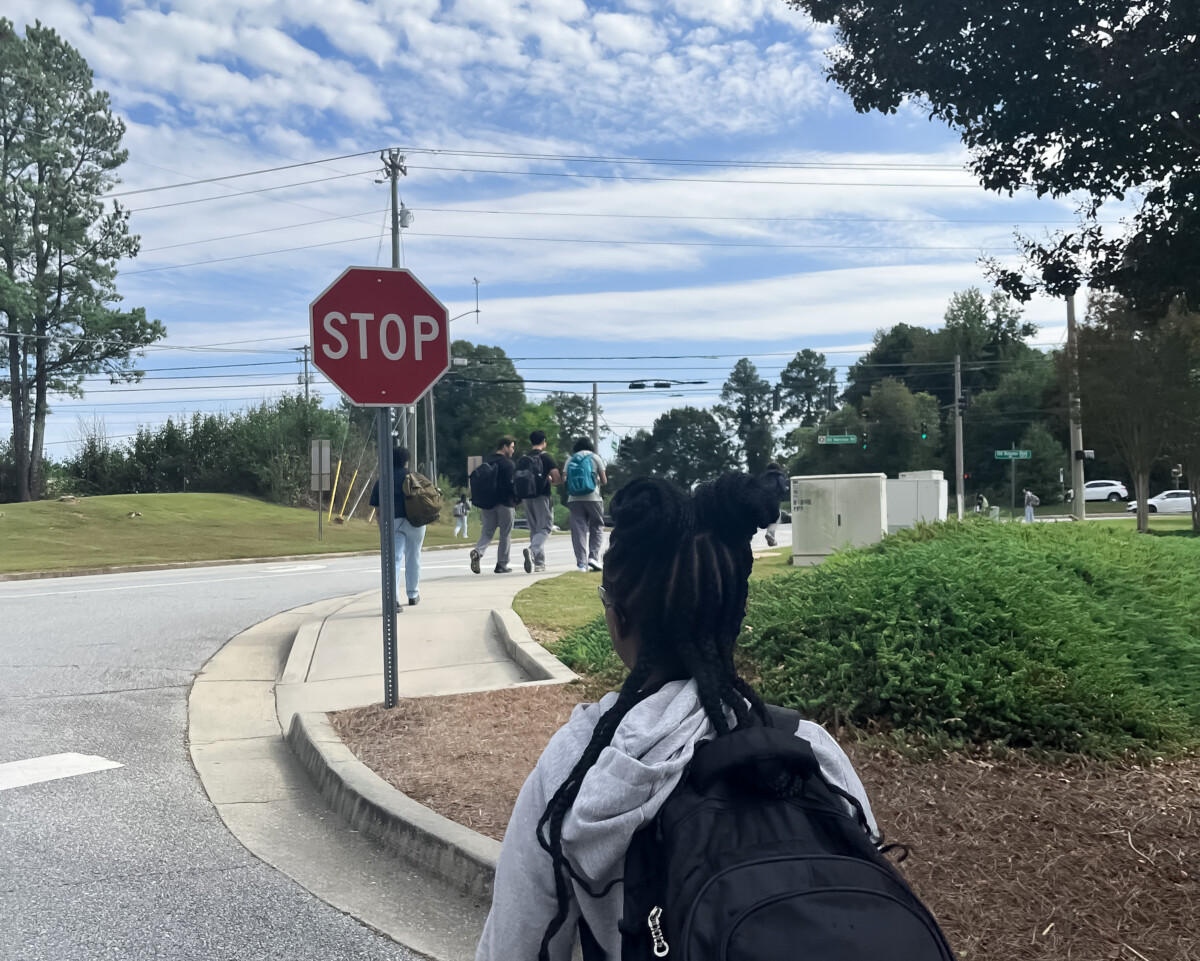
Unwalkable neighborhoods in Georgia and other states can contribute to physical and mental health issues for teenagers.
When Riley Sauls, a teenager in Snellville, Georgia, wants to hang out with her friends, the biggest hurdle isn’t planning, but rather getting there. Without a car, and with Gwinnett County’s cities designed for driving instead of walking, she often has to rely on her parents for transportation or for her friends to meet her halfway.
This isn’t just an issue for Sauls. The lack of sidewalks is a common issue that many adolescents face in Gwinnett County and throughout the United States. What is less commonly known is that teen health may be at risk because of insufficient walkability.
Car dependency has been prevalent in many American developments, because of urban sprawl and the expansion of U.S. highways in the 1950s, as noted in a 2024 report, “Steps in the Right Direction: The Pursuit of Walkability Within the United States.” However, unwalkable neighborhoods could potentially have long lasting effects on teens during the crucial development period of adolescence, according to brain and cognitive scientists and psychologists.
“Adolescents are at a unique period in their lives when the social environment is important for crucial functions in brain development, self-concept construction and mental health,” the researchers said in “The Effects of Social Deprivation on Adolescent Development and Mental Health,” a journal article published in the August 2020 issue of The Lancet Child & Adolescent Health.
Social isolation is also associated with “obesity, high blood pressure and blood glucose levels in adulthood,” according to the U.S. Office of the Surgeon General. Loneliness can put people at risk for stroke, depression, anxiety and self-harm, as well as increasing the risk for premature death by 26%.
Teens depend on walkability for connectivity and entertainment. Meeting up with friends can be a positive boost to mental health. In Gwinnett, much of the county lacks accessible sidewalks, diverse public transit routes and public spaces for youth entertainment. Teens yearn for changes to be made so that they can navigate their communities safely.
“I meet people that live in completely different areas, and it’s really hard to connect with those people,” Sauls said. “It often leads to a sense of exclusion.” She added that walking in her community “just isn’t safe,” citing a number of crimes, such as shootings and scams, as well as a dangerous lack of crosswalks.
Residents and local government officials are concerned about planning and development in Gwinnett, one of the fastest- growing counties in Georgia. Many of Gwinnett’s suburban developments were built prior to the 1990s, before sidewalks were required in neighborhoods. Many residents still do not have sidewalks today, and cars remain the primary mode of transportation.
Additionally, the accessibility of Gwinnett County’s public transportation is mixed. Buses and microtransit options like the Ride Gwinnett program are commonly found near places of increasing economic development, such as the Mall of Georgia, Sugarloaf Mills or Gwinnett Place Mall. Transit hubs outside of these places are few and far between, with some cities such as Snellville and Grayson having limited access to public transportation outside of downtown areas.
“There’s almost no public transportation [that] I see regularly,” Sauls said. “I think that could definitely improve things around here because if you do ride the bus … you’re going to [be able to] go a further distance.”
Public spaces where communities can gather to socialize and relax are inaccessible to many teenagers.
Faaria Rehan, a teen from the Buford-Mulberry area, claims that her community lacks enough free gathering spots within walking distance.
“The nearest library [is] more than a 30-minute walk, and that is definitely an issue,” Rehan said.
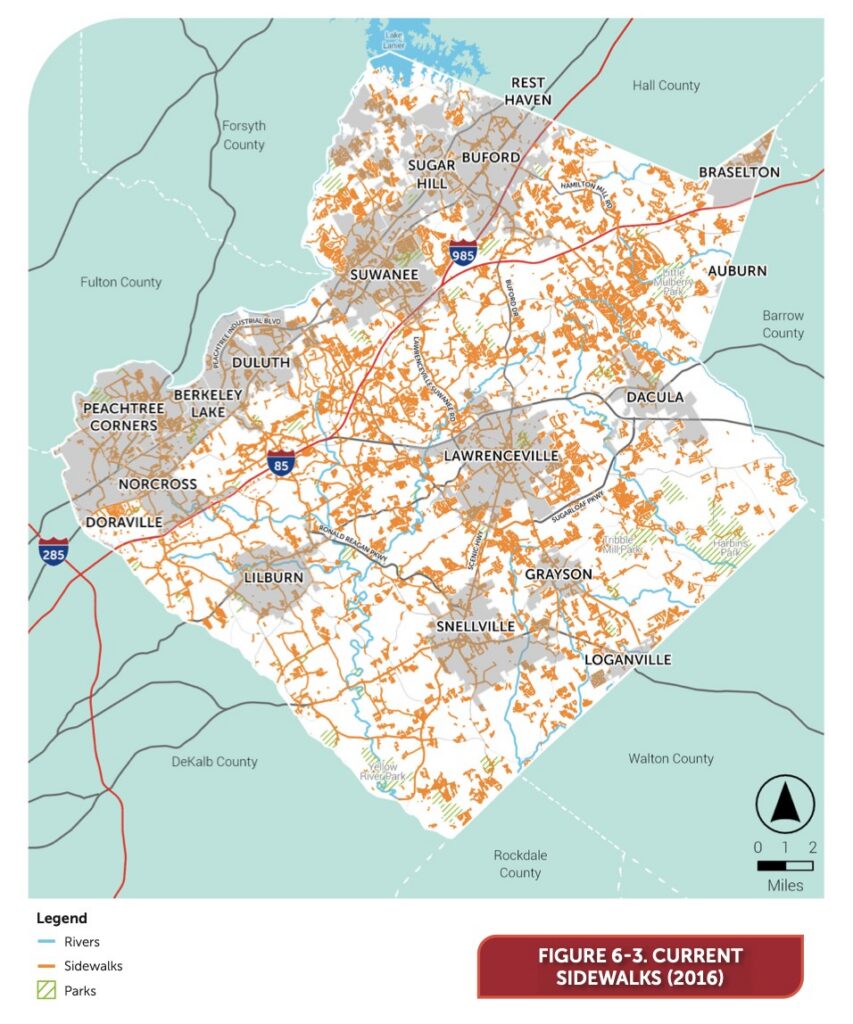
Gwinnett County’s 2045 Unified Plan addresses many concerns teens have about walkability, aiming to expand public transit routes and connect communities. The plan details adding more sidewalks and crosswalks to increase pedestrian and cyclist safety.
“If I had the ability to be connected to people that I already know in my general vicinity without having to have a car and without having to have a license, I think that would improve my general mental health,” Sauls explained. “It would be better if we had more sidewalks and improved public transportation [and] bus stops.”
Rehan had similar recommendations. “Extending the sidewalks is the best way to help with walkability without it being super expensive,” she suggested. “And for people my age, that would definitely help,”
“Maybe public transportation could give [students] a ride back after school. I think that could be a really smart way to help the youth have more access to their extracurricular activities.”
Kyla DeCambre is a reporter for VoicesofTomorrow.news through the Howard University Multicultural Media Academy. She is a senior at the Gwinnett School of Mathematics, Science, and Technology in Lawrenceville, Georgia.
